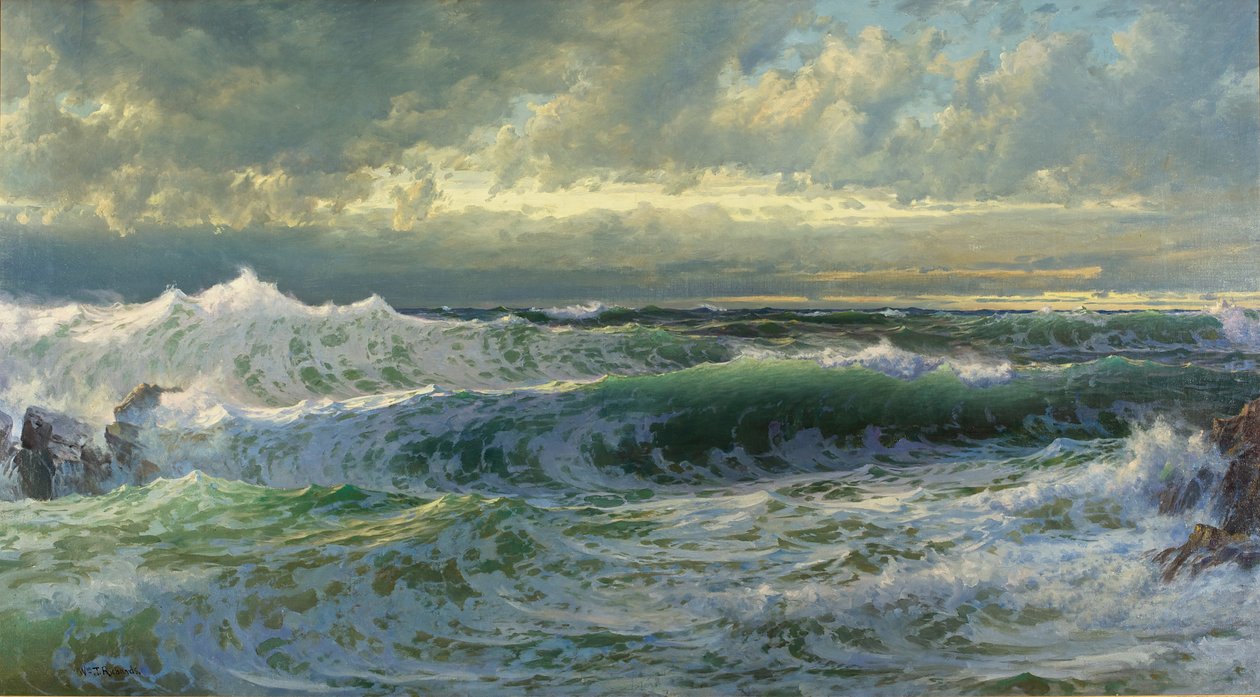
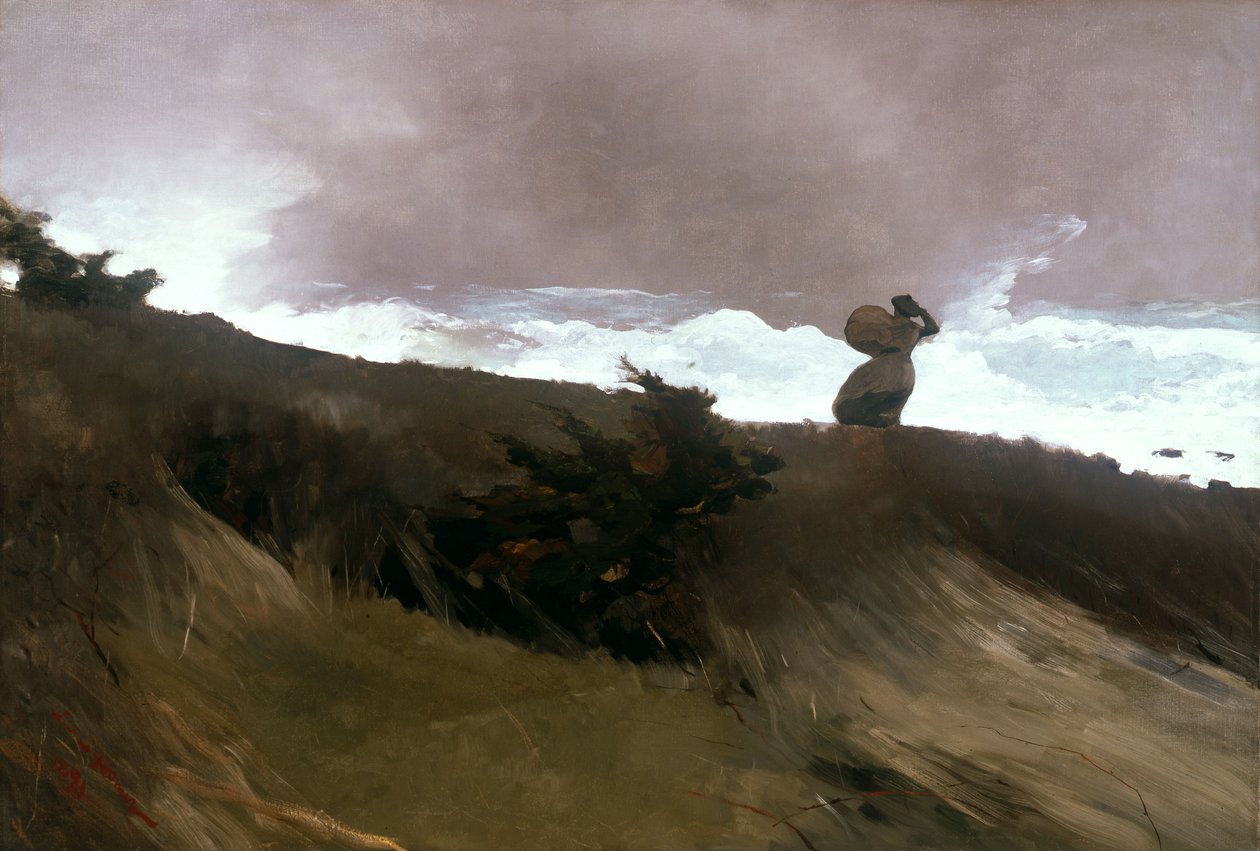
Ode to the West Wind (1)
I.
O wild West Wind, thou breath of Autumn's being,
Thou, from whose unseen presence the leaves dead
Are driven, like ghosts from an enchanter fleeing,
Yellow, and black, and pale, and hectic red,
Pestilence-stricken multitudes: O thou,
Who chariotest to their dark wintry bed
The winged seeds, where they lie cold and low,
Each like a corpse within its grave, until
Thine azure sister of the Spring shall blow
Her clarion o'er the dreaming earth, and fill
(Driving sweet buds like flocks to feed in air)
With living hues and odors plain and hill:
Wild Spirit, which art moving everywhere;
Destroyer and preserver; hear, oh, hear!
II.
Thou on whose stream, 'mid the steep sky's commotion,
Loose clouds like earth's decaying leaves are shed,
Shook from the tangled boughs of Heaven and Ocean,
Angels of rain and lightning: there are spread
On the blue surface of thine aery surge,
Like the bright hair uplifted from the head
Of some fierce Maenad, even from the dim verge
Of the horizon to the zenith's height,
The locks of the approaching storm. Thou dirge
Of the dying year, to which this closing night
Will be the dome of a vast sepulchre,
Vaulted with all thy congregated might
Of vapors, from whose solid atmosphere
Black rain, and fire, and hail will burst: oh, hear!
III.
Thou who didst waken from his summer dreams
The blue Mediterranean, where he lay,
Lulled by the coil of his crystalline streams,
Beside a pumice isle in Baiae's bay,
And saw in sleep old palaces and towers
Quivering within the wave's intenser day,
All overgrown with azure moss and flowers
So sweet, the sense faints picturing them! Thou
For whose path the Atlantic's level powers
Cleave themselves into chasms, while far below
The sea-blooms and the oozy woods which wear
The sapless foliage of the ocean, know
Thy voice, and suddenly grow gray with fear,
And tremble and despoil themselves: oh, hear!
日本語訳
西風へのオード(1)
Ⅰ
おお、荒れ狂う西風よ、秋なるものの息吹よ、
汝の見えない存在から枯葉が吹き飛ばされる、
まるで魔法使いから逃げる亡霊のよう、
黄色く、黒く、青白く、また病的に赤く、
疫病に襲われた群衆のように。おお、汝、
羽ある種を暗い冬の床に送り込む者よ、
種はその床に、墓の中の死体のように
冷たく低く横たわり、やがて空色の姉妹の春風が
夢見る大地にクラリオンを吹き鳴らし
(空気を食べよとかわいい芽を羊の群れのように
追い立てて)平原や丘を生き生きとした
色と香りで満たすのだ。
荒れ狂う精霊よ、どこでも自由に動き回る者よ、
破壊し、また保存する者よ、聞け、おお、聞け!
Ⅱ
汝の流れに乗って、せり上がる激動の空の中を、
ちぎれ雲が、大地の朽ちゆく葉のように、
大空と大海のもつれた枝から振り払われ、
雨と稲妻の先触れとして飛ばされていく。
波のように押し寄せるお前の青き空気の
表面には、狂ったバッカスの巫女が逆立てる
輝く髪のように、近づく嵐の巻き雲が、
暗い地平線の端から高き天頂までむくむくと
広がっている。汝、死にゆく年の哀歌よ、
お前にとってこの暮れていく夜は、
お前の結集した蒸気の力が作り出す巨大な
墳墓の円天井となろう、そしてその濃密な
大気から、黒い雨が、炎が、雹(ひょう)が、
どっとほとばしり出るのだ。おお、聞け!
Ⅲ
汝、青き地中海をその夏の眠りから起こす者よ、
海は、バイアエ湾の軽石島のそばで、水晶の
ような流れの渦にあやされて、眠りのうちに
古い宮殿や塔が、波の強い光の中で震えるのを
見ていた、それは一面、空色のコケや花に
覆われており、そのあまりの美しさは、
その光景を想像しただけで目まいを
起こさせるほどのもの! しかし
お前が来ると、お前を通すため、大西洋の
平たい軍勢はみずから裂けて深い谷となる、
するとそのはるか下方で、大海の
樹液なき葉をつける海花や湿った森は、
お前の声を知り、突然恐怖で灰色になって震え、
そして葉を投げ出すのだ。おお、聞け!
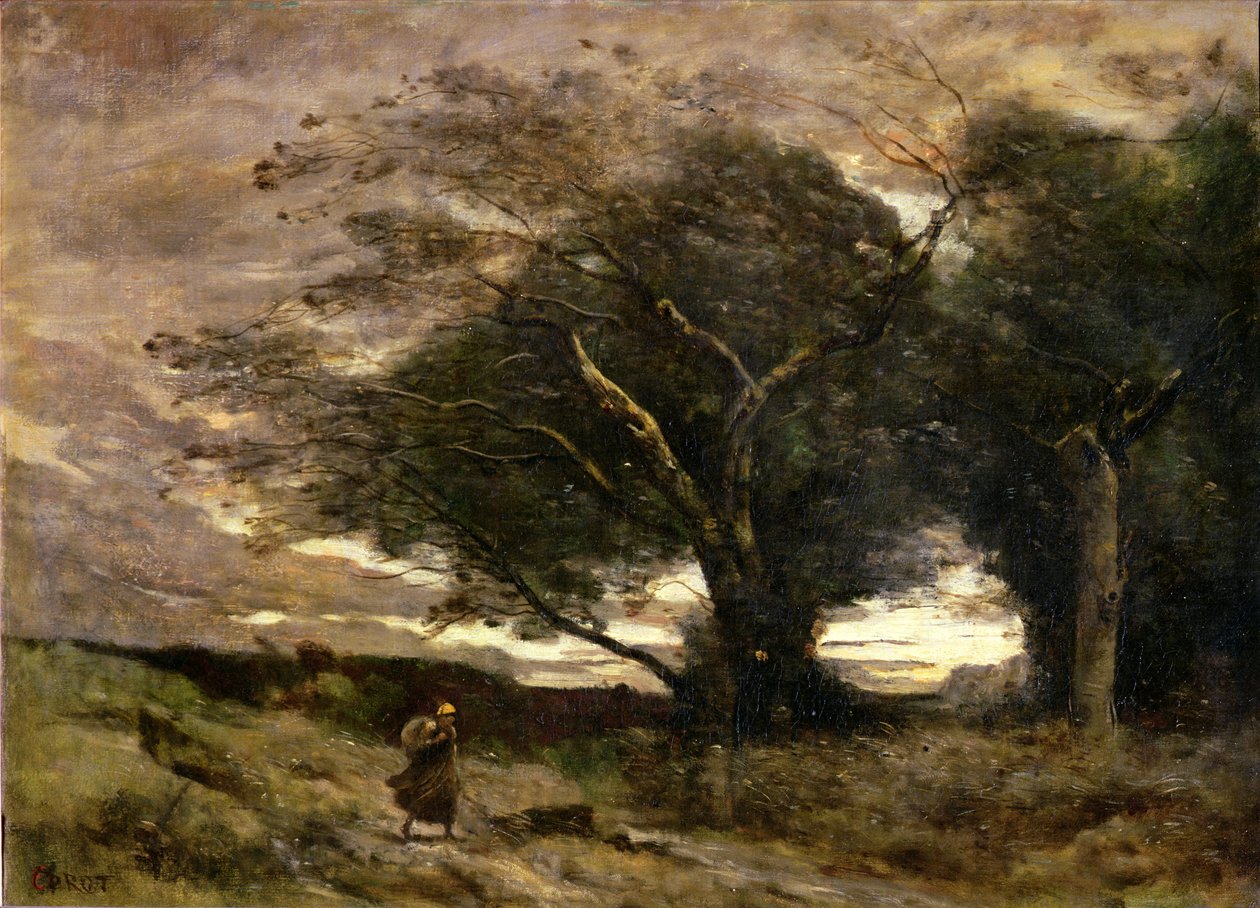
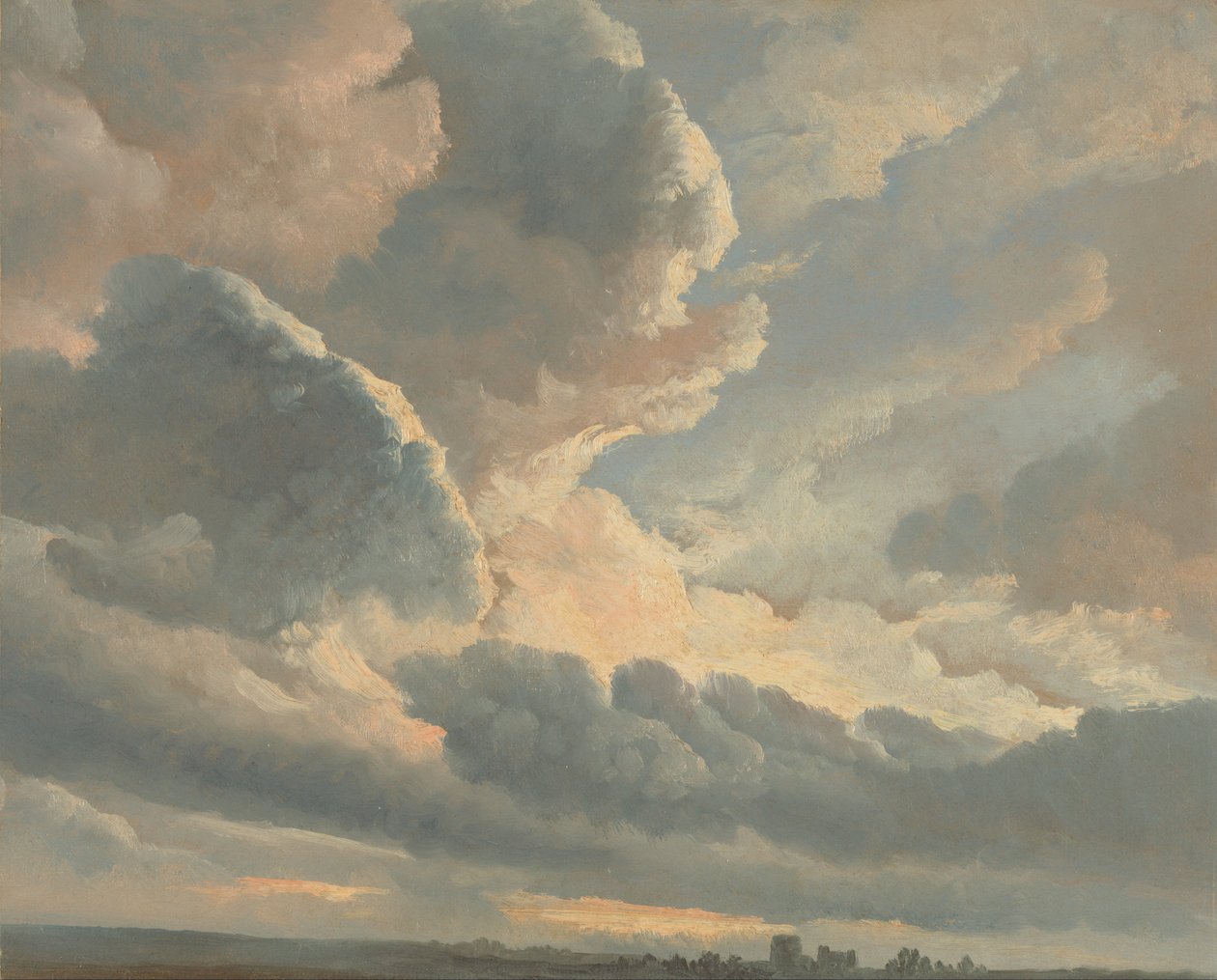
詩の内容
オードとは、ギリシャ語の「歌」が語源ですが、特定の対象に呼び掛ける形式の抒情詩のことです。
この詩で、詩人は吹き荒れる西風のすさまじいパワーに神にも似た力を感じ、その威力に陶酔しています。
この西風は詩人がイタリアはフローレンスのアルノ川沿いの森に滞在していた時に遭遇したものです。
それはイタリア特有の強風で、イギリスで吹く穏やかな西風とは違います。
その凄まじさに魂が震えるほど圧倒されたのでしょう。
第1連で歌われるのは西風が大地におよぼす変化です。
西風は森の枯葉を舞い散らせ、そのさまは疫病にかかった群衆が幽霊のように追い散らされるようです。
滅びかけた古い世界が一気に打ち砕かれ、一掃されるさまでしょうか。
でも同時に新しい種を大地にばらまき、新生の準備もします。
これから冬を迎え、長い眠りを経れば、新生の季節が訪れます。
風は、まさに生と死をつかさどる神といってもいいほどです。
冒頭のwild West Windは/w/音が3回連続し、まるで風が連続して打ち付けるような強い音響的効果を残します。
しかもWest Windは頭文字ですから、西風に魂が注がれて神格化されています。
第2連では大空のさまが歌われます。
強風に吹かれて、ちぎれ雲が空を疾駆します。
そのさまは大空と大海が作り出す巨大な雲の森から振り払われた枯葉のようです。
そのそびえ立つ森は勢いよく膨れ上がる嵐の雲で、大気を乱し、黒い雨、稲光、雹を引き起こして、古きもの、「死にゆく年」を砕きます。
やはり破壊を通して新しい世界をもたらそうとする力が感じられます。
なおMaenad /míːnæd/(狂った女の意)とはギリシャ神話の酒神バッカスの巫女(みこ)のことで、よく髪を振り乱し、狂乱して踊り回る姿で描かれます。
西風も神格化された存在ですが、乱れ飛ぶ雲のさまにも神話の雰囲気が色濃く漂います。
第3連は大海の様子です。
西風は、安らかに眠って心地よい夢を見ていた地中海を揺さぶり起こし、海を二つに裂いて通り抜けようとします。
そのすさまじい力に、海底で眠っていた世界は圧倒され、恐怖に打たれ、ひれ伏します。
海底に眠る「古い宮殿や塔」とは水中に没した廃墟のことですが、波の光に輝いて美しく幻想的に見えます。
海底には森もあり、西風の力はそこにも及んで葉を舞い散らせます。
この「古い宮殿や塔」は中世の世界を連想させます。
それを震撼させ、降伏させる西風は、まさに中世を打ち砕き、ルネサンス(再生の意)をもたらした歴史の力を感じさせます。
詩人はこうした西風の力に恐怖を覚えるどころか、その圧倒的な力に陶酔し、賛美し、その力と同化しようとします。
西風という大自然を揺り動かす巨大な力に、自分の魂の奥で燃える激しい情熱の反映を見るのでしょう。
詩人は風の中に立ち、じっと風の動きを見ているのでしょうが、詩人の想像力はその場から解き放たれ、風と一体化してあちこち自由に飛翔します。
とりわけ第3連では、詩人は西風と一緒になって、上の方から、海が割れ、海底の豪華な世界が切り開かれるのを見ています。
あるいはむしろ、詩人の想像力が西風となって新しい世界を作り出していると言ってもいいかもしれません。
実際、詩人の想像力は現実の西風を写しているのではなく、その西風の形を借りて、壮大な神話の世界を作り出しています。
その想像力により、詩人は自分に課せられた社会的束縛を断ち切って、自由奔放に大空を飛翔し、その圧倒的な力で古い世界に挑み、その世界を打ち砕こうとしています。
その破壊によってもたらされるものは再生です。
死すべき葉を蹴散らし、古い世界を一掃し、そこに再生の種をばらまいて、廃墟から新しい世界を生み出そうとしています。
西風は、この詩の舞台となるイタリアでは地中海から吹いてくる秋の暴風です。
西風は、イギリスでは大西洋から来る春の風(zephyr)で、暴風どころか、春の訪れを告げるやさしい風です。
詩人が陶酔するのはこのイタリアに吹き荒れる秋の風です。
しかも滞在していたフローレンス(フィレンチェ)はイタリア・ルネサンスの中心地でもあり、中世の暗黒時代を一掃し、光り輝く新しい時代を生み出した歴史の力がまさに西風となって再現されていると言ってもいいかもしれません。
日本では西風という言葉はあまり使われません。
台風は西風の影響を受けますが、台風を西風とは言いません。
日本でよく使われるのは北風と南風で、北風は冬に吹く木枯らしの風、南風は夏に吹く風です。
暴風という点では春一番と呼ばれる南風が近いですが、春一番は春を呼ぶ風です。
シェリーの西風はむしろ冬をもたらす風で、枯葉を一掃して冬を呼ぶ破壊のイメージを持っています。
ですから正確に言えば風の種類は違いますが、強風という点では台風や春一番と同じです。
韻律の分析
韻律を調べます。
1連は、3行のまとまりが4回続き、最後は2行で締めくくられます。
ソネットと同じ14行構成で、四つの部分に分かれます。
シェイクスピアのソネットに似ていますが、特徴的なのは脚韻です。
aba, bcb, cdc, ded, eeという構成を取り、次々に連鎖していくような形になっています。
風が次々に移動していくさまを写しているのでしょう。
行末にピリオドが来ることもなく、流れが途切れずに伝わる感じです。
リズムは1行に「弱・強」が五回続きます。
ただし行頭にひんぱんに「強・弱」が混ざります。
風が渦を巻くようなイメージでしょうか。
I.
O wild | West Wind, | thou breath | of Au-|tumn's be-ing,
Thou, from | whose un-|seen pres-|ence the | leaves dead
Are driv-|en, like ghosts | from an | en-chant-|er flee-ing,
Yel-low, | and black, | and pale, | and hec-|tic red,
Pes-ti-|lence-strick-|en mul-|ti-tudes: | O thou,
Who char-|i-ot-est | to their | dark win-|try bed
The wing-|ed seeds, | where they | lie cold | and low,
Each like | a corpse | with-in | its grave, | un-til
Thine az-|ure sis-|ter of | the Spring | shall blow
Her clar-|i-on o'er | the dream-|ing earth, | and fill
(Driv-ing | sweet buds | like flocks | to feed | in air)
With liv-|ing hues | and o-|dors plain | and hill:
Wild Spir-|it, which | art mov-|ing eve-|ry-where;
De-story-|er and | pre-serv-|er; hear, | oh, hear!
1行目2詩脚目のWest Windは「強・強」のリズム、2行目5詩脚目のleaves deadも「強・強」のリズムで、風の強さを感じさせます。
行頭は6か所にわたり、「強・弱」のリズムとなっています。
脚韻はbeingとfleeing、deadとredとbed、thouとlowとblow、untilとfillとhill、airとwhereとhearとなります。
このうち、beingとfleeingは弱音節で終わる女性韻です。
またthouは/au/という母音ですので、low, blowの/ou/とは不完全韻となります。
最後のhearも/iə/という母音ですので、air, whereの/ɛə/とは不完全韻となります。
またwingedは/wiŋid/と発音し、2音節とします。
文中の韻ではwild West Windに/w/の頭韻、wild, Wind, deadに/d/の子韻、West, breath, presence, deadに/e/の母韻、Autumn, unseen, an, enchanterに母音による頭韻、Autumn's, whose, pres-ence, leavesに/z/の子韻、being, unseen, leaves, fleeingに/iː/の母韻、unseen, drivenに/n/の子韻、presence, ghostsに/s/の子韻、dead, drivenに/d/の頭韻、Yel-low, pale, mul-titudesに/l/の子韻、Yellow, hectic, red, Pestilence, bedに/e/の母韻、black, strick-enに/k/の子韻、pale, Pestilenceに/p/の頭韻、bed, winged, coldに/d/の子韻、seeds, Eachに/i ː/の母韻、lie, low, likeに/l/の頭韻、cold, lowに/ou/の母韻、cold, corpseに/k/の頭韻、Each, azure, o'er, earth, air, odorsに母音の頭韻、sister, Springに/s/の頭韻、until, shall, fillに/l/の子韻、dreaming, Drivingに/dr/の頭韻、dreaming, sweet, feedに/i ː/の母韻、fill, flocks, feedに/f/の頭韻、living, hillに/i/の母韻、hues, hillに/h/の頭韻、hues, odorsに/z/の子韻、Wild, which, every-whereに/w/の頭韻、Spirit, De-stroyerに/s/の頭韻などがあります。
II.
Thou on | whose stream, | 'mid the | steep sky's | com-mo-tion,
Loose clouds | like earth's | de-cay-|ing leaves | are shed,
Shook from | the tan-|gled boughs | of Heav-|en and O-cean,
An-gels | of rain | and light-|ning: there | are spread
On the | blue sur-|face of | thine aer-|y surge,
Like the | bright hair | up-lift-|ed from | the head
Of some | fierce Mae-|nad, e-|ven from | the dim verge
Of the | ho-ri-|zon to | the ze-|nith's height,
The locks | of the | ap-proach-|ing storm. | Thou dirge
Of the dy-|ing year, | to which | this clos-|ing night
Will be | the dome | of a | vast sep-|ul-chre,
Vault-ed | with all | thy con-|gre-gat-|ed might
Of va-|pors, from | whose sol-|id at-|mos-phere
Black rain, | and fire, | and hail | will burst: | oh, hear!
脚韻はcommotionとOcean、shedとspreadとhead、surgeとvergeとdirge、heightとnightとmight、repulchreとatmosphereとhearです。
commotion, Oceanは弱音節で終わる女性韻です。
sepulchreは/ər/で終わるので、atmosphere, hearの/iər/とは不完全韻になります。
steep sky's, blue sur-face, bright hair, fierce Mae-nad, vast sep-ulchre, Black rainは韻律上は「弱・強」ですが、内容的には形容詞に強意がありますので「強・強」とした方がよいでしょう。
文中の韻では、Thou, clouds, boughsの/au/の母韻、stream, steep, skyの/s/の頭韻(最初の二つは/st/)、stream, steep, leavesの/iː/の母韻、sky's, clouds, earth's, leaves, boughs, Angelsの/z/の子韻、commotion, clouds, de-cayingの/k/の頭韻、shed, Heaven, spreadの/e/の母韻、earth's, Ocean, Angels, On, of, aeryの母音による頭韻、shed, tangled, spreadの/d/の子韻、Heaven, Ocean, rain, Onの/n/の子韻、lightning, thine, Like, brightの/ai/の母韻、blue, brightの/b/の頭韻、spread, surface, surgeの/s/の頭韻(あとの二つは/səː/の頭韻)、hair, headの/h/の頭韻、uplifted, head, Maenadの/d/の子韻、some, from, dimの/m/の子韻、horizon, heightの/h/の頭韻と/ai/の母韻、dirge, dying, domeの/d/の頭韻、dying, nightの/ai/の母韻、night, vast, mightの/t/の子韻、vast, Vaulted, vaporsの/v/の頭韻、Vaulted, congregated, solidの/d/の子韻、from, fireの/f/の頭韻、Black, burstの/b/の頭韻、rain, hailの/ei/の母韻、sol-id, hail, willの/l/の子韻などがあります。
III.
Thou who | didst wak-|en from | his sum-|mer dreams
The blue | Med-i-|ter-ra-|ne-an, where | he lay,
Lulled by | the coil | of his | crys-tal-|line streams,
Be-side | a pum-|ice isle | in Bai-|ae's bay,
And saw | in sleep | old pal-|ac-es | and tow-ers
Quiv-er-|ing with-|in the wave's | in-tens-|er day,
All o-|ver-grown | with az-|ure moss | and flow-ers
So sweet, | the sense | faints pic-|tur-ing | them! Thou
For whose | path the | At-lan-|tic's lev-|el pow-ers
Cleave them-|selves in-|to chasms, | while far | be-low
The sea-|blooms and | the oo-|zy woods | which wear
The sap-|less fo-|li-age of | the o-|cean, know
Thy voice, | and sud-|den-ly | grow gray | with fear,
And trem-|ble and | de-spoil | them-selves: | oh, hear!
脚韻はdreamsとstreams、layとbayとday、towersとflowersとpowers、Thouとbelowとknow、wearとfearとhearです。
towers, flowers, powersは弱音節で終わる女性韻です。
またThou, below, knowは/au/と/ou/の不完全韻、wear, fear, hearも/ɛər/と/iər/の不完全韻になります。
文中の韻ではwaken, whereの/w/の頭韻、waken, layの/ei/の母韻、waken, Mediterranean, crystallineの/n/の子韻、lay, Lulledの/l/の頭韻、coil, crystal-lineの/k/の頭韻と/l/の子韻、his, streams, Baiae's, palaces, towers, wave's, flowersの/z/の子韻、Beside, Baiae's, bayの/b/の頭韻、streams, Be-side, saw, sleepの/s/の頭韻、isle, old, intenser, All, overgrown, azureの母音による頭韻、within, wave'sの/w/の頭韻、wave's, dayの/ei/の母韻、intens-er, moss, sense, faints, Atlanatic'sの/s/の子韻、flowers, faintsの/f/の頭韻、So, sweet, senseの/s/の頭韻、whose, powers, themselves, chasms, blooms, woodsの/z/の子韻、picturing, path, powersの/p/の頭韻、At-lantic's, level, be-lowの/l/の頭韻、Cleave, chasmsの/k/の頭韻、below, bloomsの/b/の頭韻、sea, sapless, suddenly, de-spoil, them-selvesの/s/の頭韻、woods, wearの/w/の頭韻、foliage, fearの/f/の頭韻、grow, grayの/g/の頭韻、tremble, despoilの/l/の子韻、tremble, themselvesの/e/の母韻などがあります。
このように、どの連も韻が実に多く、強く響き合っています。
これも吹き荒れる風のすさまじい響きを写しているのかもしれません。