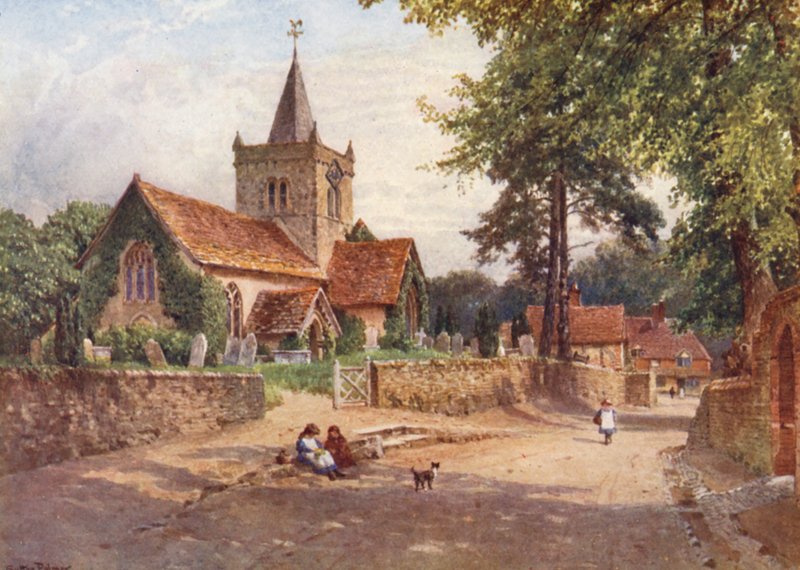
We Are Seven
—A simple child,
That lightly draws its breath,
And feels its life in every limb,
What should it know of death?
I met a little cottage girl:
She was eight years old, she said;
Her hair was thick with many a curl
That clustered round her head.
She had a rustic, woodland air,
And she was wildly clad;
Her eyes were fair, and very fair;
—Her beauty made me glad.
"Sisters and brothers, little maid,
How many may you be?"
"How many? Seven in all," she said,
And wondering looked at me.
"And where are they? I pray you tell."
She answered, "Seven are we;
And two of us at Conway dwell,
And two are gone to sea.
"Two of us in the churchyard lie,
My sister and my brother;
And in the churchyard cottage, I
Dwell near them with my mother."
"You say that two at Conway dwell,
And two are gone to sea,
Yet ye are seven! — I pray you tell,
Sweet maid, how this may be."
Then did the little maid reply,
"Seven boys and girls are we;
Two of us in the churchyard lie,
Beneath the churchyard tree."
"You run about, my little maid,
Your limbs they are alive;
If two are in the churchyard laid,
Then ye are only five."
"Their graves are green, they may be seen,"
The little maid replied,
"Twelve steps or more from my mother's door,
And they are side by side.
"My stockings there I often knit,
My kerchief there I hem;
And there upon the ground I sit,
And sing a song to them.
"And often after sunset, sir,
When it is light and fair,
I take my little porringer,
And eat my supper there.
"The first that died was sister Jane;
In bed she moaning lay,
Till God released her of her pain;
And then she went away.
"So in the churchyard she was laid;
And, when the grass was dry,
Together round her grave we played,
My brother John and I.
"And when the ground was white with snow,
And I could run and slide,
My brother John was forced to go,
And he lies by her side."
"How many are you, then," said I,
"If they two are in heaven?"
Quick was the little maid's reply,
"O master! we are seven."
"But they are dead; those two are dead!
Their spirits are in heaven!"
'T was throwing words away; for still
The little maid would have her will,
And say, "Nay, we are seven!"
日本語訳
あたしたちは七人
――素朴な子供、
軽やかに息を吸い、
手足の隅々まで命を感じる子、
そんな子は死について何を知るのだろう?
幼い農家の少女に会った。
あたしは八歳、と少女は言った。
髪はふさふさで、たくさんの巻き毛が
頭に房を成していた。
少女は田舎臭く、森に住む感じで、
服の着方は乱雑だった。
目は美しかった、とても美しかった。
――その美しさを見て、私は喜んだ。
「お嬢ちゃん、お兄さんお姉さんは
何人いるの?」
「何人? ぜんぶで七人」少女はそう言い、
不思議そうに私を見た。
「それで、みんなはどこにいるの? 教えて」
少女は答えた、「あたしたちは七人。
二人はコンウェーに住んでいて、
二人は船乗りになったの。
「二人は教会の墓地にいるわ、
あたしのお姉ちゃんとお兄ちゃん。
そしてあたしは二人の近くの教会の小屋に、
お母ちゃんと一緒に住んでるの」
「二人はコンウェーに住んでいて、
二人は船乗りになったんだね、
なのに七人!——教えてほしいな、
お嬢ちゃん、これはどういうことかな」
すると少女は答えた、
「男の子と女の子合わせて七人。
二人は教会の墓地、
墓地の木の下にいるのよ」
「お嬢ちゃんは元気に走り回るんだね、
手も足もぴちぴちしている。
もし二人が教会の墓地にいるなら、
きょうだいは五人だけだね」
少女は答えた、「お墓は緑で、
お母ちゃんの家のドアから
十二歩ぐらいのところに見えるの、
二人は並んでいるのよ。
「よくそこで靴下を編むの、
そこでスカーフのへりも縫うの。
そこで、地面にすわって、
歌をうたってあげるのよ。
「そしてよく日が沈んでから、
空がまだ明るくてきれいなとき、
あたしのお皿を持っていって、
そこで夕ご飯を食べるのよ。
「初めに死んだのはジェーンお姉ちゃん。
ベッドにうめきながら寝ていたら、
神様が苦しみから救ってくれたの。
それから行ってしまったわ。
「だからお姉ちゃんは墓地にいたの。
そして、草が枯れたとき、
お墓のまわりで一緒に遊んだの、
ジョンお兄ちゃんとあたしが。
「そして地面が雪で白くなったとき、
あたし、走ったりすべったりできたわ、
ジョンお兄ちゃんも行かなくちゃいけなかった、
今はお姉ちゃんの隣にいるわ」
「じゃあ、ぜんぶで何人なんだい」と私は聞いた。
「もし二人が天国にいるんなら」
少女の答えは素早かった、
「ああ、おじさん! あたしたちは七人」
「でも死んでいる。二人は死んだんだ!
二人の魂は今は天国にいる!」
何を言っても無駄だった、というのも、
少女は相変わらず意志を押し通そうとして
こう言った、「違う、あたしたちは七人!」
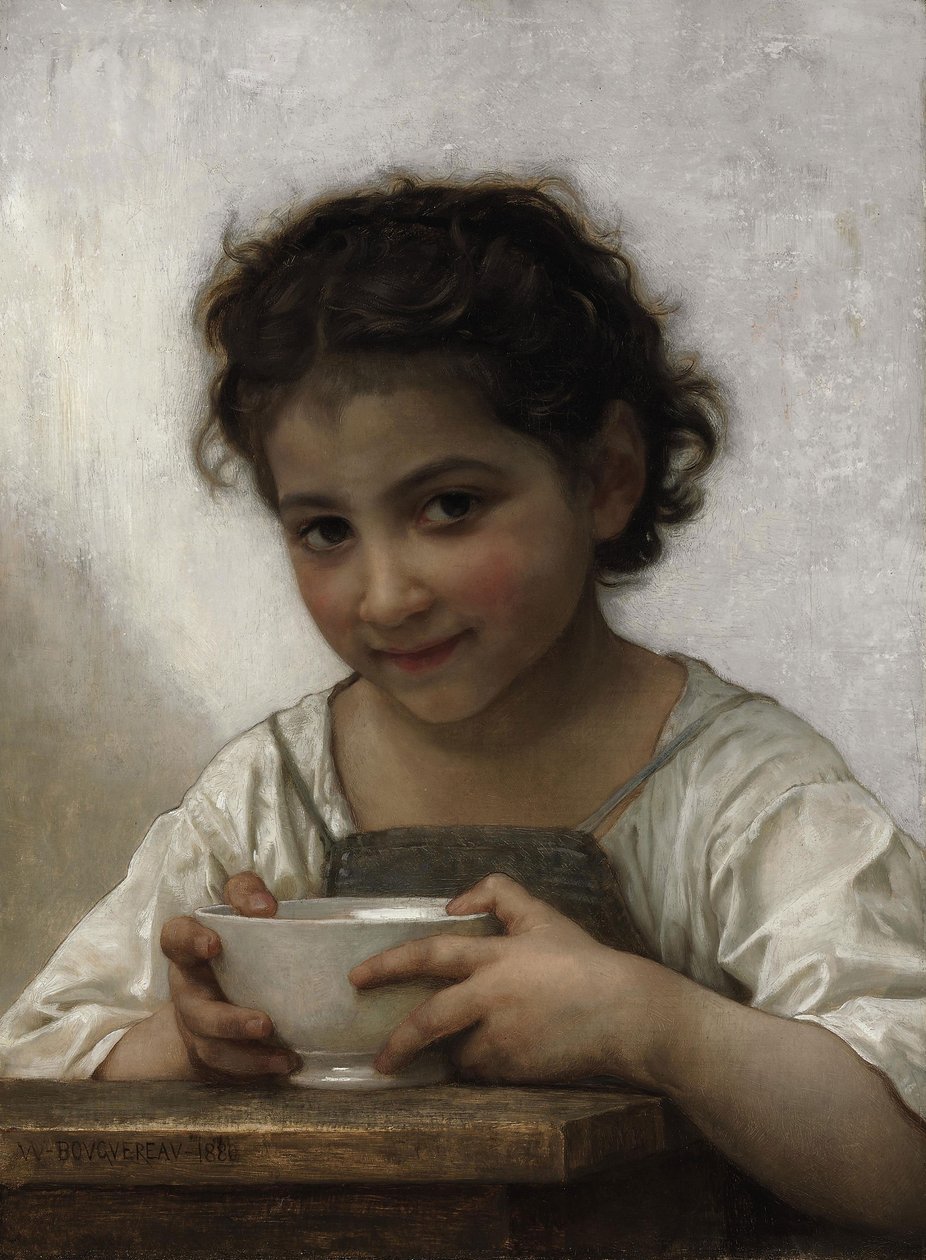
詩の内容
少女のきょうだいは前は七人、でも二人が死んで、今は五人――それは教育を受けた人の当然と言えば当然の発想です。
しかし片田舎に住む貧しく粗野な少女は、そういう教え込まれた発想ではなく、自分が感じたままの発想で答えます――私たちは七人だと。
死んでしまった人も少女にとってはちゃんと生きています。
ただ姿が見えなくなっただけで、家のすぐそばの墓地にちゃんと横たわっており、それゆえ少女は話しかけたり歌をうたってあげたり、あるいはお墓で編み物をしたり夕食を食べたりしています。
少女の心には死んでしまった兄や姉の姿がちゃんと見えているのでしょう、いつも一緒なのです。
少女の発想は、常識を持つ大人から見れば無知な子供のばかげた発想にすぎないかもしれません。
しかしそこには宗教にも通じる神話的な発想が認められます。
死者の魂は滅びることはないというのは宗教が教えることです。
でも少女は誰に教えられなくても、自分で強くそのことを感じ、信じ、その信念に基づいて行動しています。
その姿に詩人は何を見たのでしょう。
服はボロボロ、髪はぼさぼさでも、詩人は少女の美しい目に惹かれています。
その美しい目のように、死んだ兄や姉の魂の不滅を一途に信じるその純真な心に詩人は強く惹かれているようです。
なおConwayは今のConwyの旧名です。
コンウィはウェールズの北西部にある町の名前で、観光地として有名です。
韻律の分析
韻律は「弱・強」のリズムを基本にして、それが、1、3行目では4回続き、2、4行目では3回続く、4-3-4-3の形です。
脚韻は奇数行と偶数行にあり、ababの形になります。
バラッドでよく使われる平易な形式です。
ただし1連目の1行目は弱強の2回連続で脚韻はありません。
導入部だからでしょうか。
また最終連は5行で構成されており、2、5行目で一つの韻、3、4行目で一つの韻となっています。
締めくくりとしての強調の効果があります。
最初の4連だけ見ておきます。
—A sim-|ple child,
That light-|ly draws | its breath,
And feels | its life | in eve-|ry limb,
What should | it know | of death?
脚韻はbreathとdeathです。
文中の韻ではchild, lightly, lifeの/ai/の母韻、lightly, life, limbの/l/の頭韻、breath, every, deathの/e/の母韻などがあります。
I met | a lit-|tle cot-|tage girl:
She was eight | years old, | she said;
Her hair | was thick | with man-|y a curl
That clus-|tered round | her head.
脚韻はgirlとcurl、saidとheadです。
文中の韻では、met, lit-tle, cot-tage, eightの/t/の子韻、little, girlの/l/の子韻、old, saidの/d/の子韻、hair, headの/h/の頭韻、curl, clusteredの/k/の頭韻、clustered, round, headの/d/の子韻などがあります。
She had | a rus-|tic, wood-|land air,
And she | was wild-|ly clad;
Her eyes | were fair, | and ver-|y fair;
—Her beau-|ty made | me glad.
脚韻はairとfair、cladとgladです。
文中の韻では、had, wood-land, wild-ly, cladの/d/の子韻、woodland, wildlyの/w/の頭韻、wildly, eyesの/ai/の母韻、fairの繰り返し、made, gladの/d/の子韻などがあります。
"Sis-ters | and broth-|ers, lit-|tle maid,
How man-|y may | you be?"
"How man-|y? Sev-|en in all," | she said,
And won-|der-ing looked | at me.
脚韻はmaidとsaid(視覚韻)、beとmeです。
文中の韻ではSisters, brothersの/z/の子韻、brothers, beの/b/の頭韻、maid, many, may, many, meの/m/の頭韻、maid, mayの/ei/の母韻、Seven, saidの/s/の頭韻などがあります。