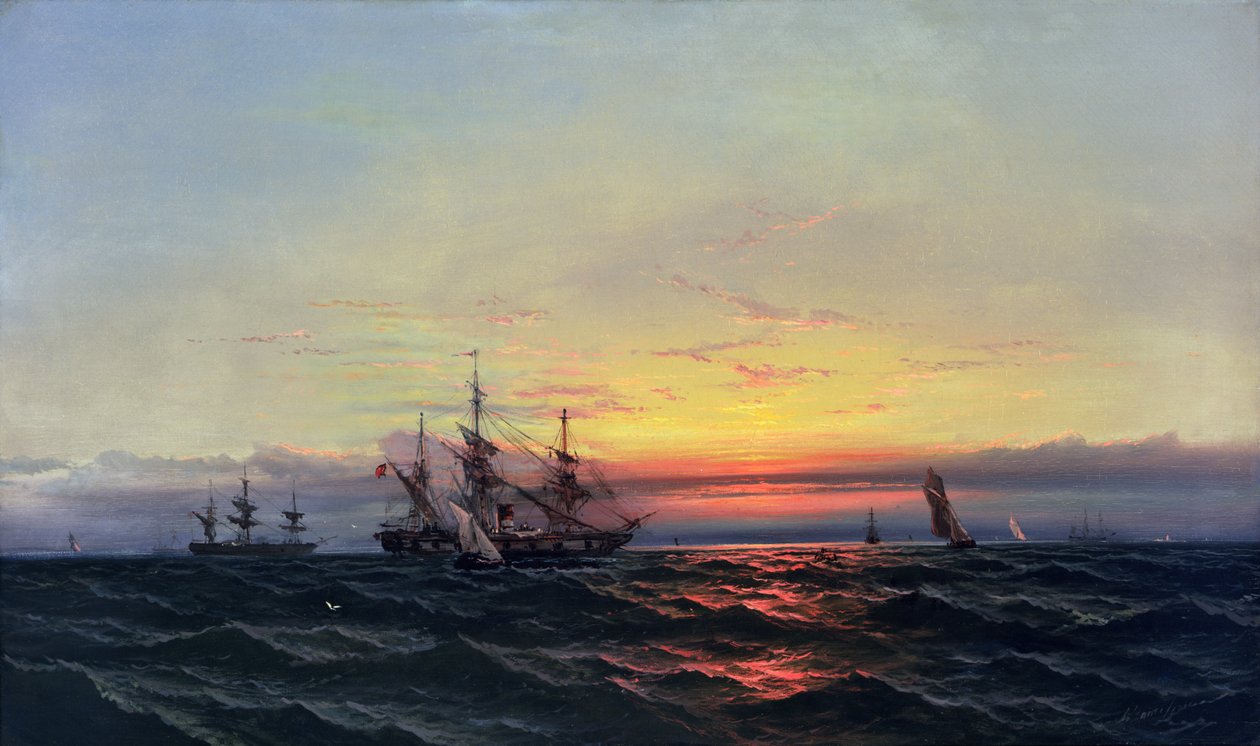
Sea-Fever
I must down to the seas again, to the lonely sea and the sky,
And all I ask is a tall ship and a star to steer her by,
And the wheel's kick and the wind's song and the white sail's shaking,
And a grey mist on the sea's face, and a grey dawn breaking.
I must down to the seas again, for the call of the running tide
Is a wild call and a clear call that may not be denied;
And all I ask is a windy day with the white clouds flying,
And the flung spray and the blown spume, and the sea-gulls crying.
I must down to the seas again, to the vagrant gypsy life,
To the gull's way and the whale's way, where the wind's like a whetted knife;
And all I ask is a merry yarn from a laughing fellow-rover,
And quiet sleep and a sweet dream when the long trick's over.
日本語訳
海恋し
また海へ行かなければ、孤独な海と空のもとへ
求めるものはただ、帆高き船と船を導く星、
舵輪のキックと風の歌、白帆のはためき、
海面をおおう灰色の霧と広がってゆく灰色の夜明け。
また海へ行かなければ、流れる潮の呼び声は
荒くはっきりした呼び声で、あらがい難いものだから。
求めるものはただ、白雲の飛ぶ風の強い日、
飛び散る水しぶき、吹き飛ぶ泡、カモメの叫び。
また海へ行かなければ、さすらいのジプシー生活へ
風が研いだナイフのように鋭いカモメの道、クジラの道へ
求めるものはただ、笑う放浪仲間の陽気なほら話、
長い交代勤務の終わったあとの静かな眠りと甘い夢。
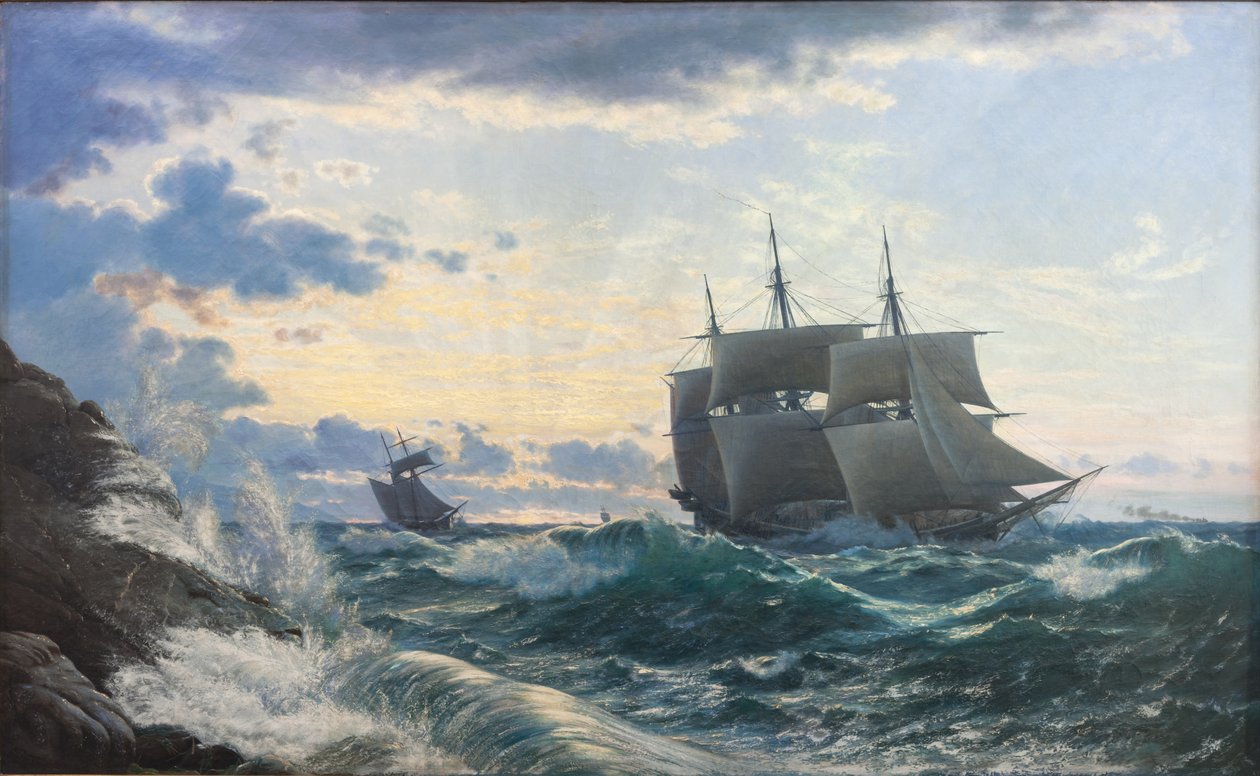
詩の内容
若き日々を船乗りとして海で過ごし、その後、陸に上がった詩人が海を恋い慕う詩です。
詩人の今の生活がどういうものかは分かりませんが、第3連でジプシーのような放浪生活に戻りたいと言っていますから、今の生活は自由の少ない、型にはまった堅苦しい社会生活なのかもしれません。
もちろんもう戻ることはできないのですが、若き日の海での自由で楽しい思い出はいつまでも見果てぬ夢としてよみがえります。
詩の構成は単純で、どの連でも1行目にI must down to the seas againという使命感が述べられ、そのあとにAnd all I ask isという切り出しで、詩人の求めることが連続して述べられています。
第1連ではAnd all I ask isのあと、andが6回も使われ、望むものが7つも列挙されています。
それ以外にもandが2回使われていますから、4行に計8回も使われていることになります。
願望が、次から次へと波のように心に押し寄せてくる感じでしょうか。
第2連では願望の列挙を表すandは3回使われ、4つの願望が列挙されています。
ほかのandを含めると計5回です。
数は減りますが、その代わり、callという語が3回使われています。
これは海の呼び声です。
繰り返しその呼び声を聞けば、帰りたい思いに駆られて仕方がないでしょう。
第3連で願望を列挙するandは2つ、ほかのandを含めて計4つです。
しかし今度は戻りたい場所を示す前置詞のtoが3回使われ、その目的語は4つです。
すなわちto the seas, to the vagrant gypsy life, To the gull's way and the whale's wayで、やはり海に戻りたいという気持ちが波のように押し寄せてくる感じです。
このように詩の構造自体は単純で、繰り返しが圧倒的なのですが、そのことで海に戻りたいという強い願望が叫びのようににじみ出ています。
この詩の特徴として、1行の詩脚数が6あるいは7もあり、かなり長くなっています。
第2連1行目、第3連2行目は音節の数が16もあります。
よく使われる一般的な詩脚数は4あるいは5で、音節の数は、一般的な「弱・強」なら8から10です。
これが一般的なのは、一息で話すことができる自然な長さだからです。
それと比べるとこの詩は長くなるのですが、この長さも意識的に使われていると思われます。
詩の内容と照らし合わせると、どこまでも広がる思いを表すのかもしれません。
あるいは、どこまでも広がる海を表しているのかもしれません。
どちらにせよ、波のうねりが連続して押し寄せてくるイメージになります。
なおI must down to ~ はI must go down to ~ということですが、goをつけるとリズムが崩れるので省かれています。
downの方を省くこともできますが、downには下へ、過去へというイメージがあるので、古里へ戻るという意味ではdownを出した方がよかったのでしょう。
ただし、のちに作者はgoを挿入していますが、ここではオリジナル版を使います。
韻律の分析
「弱・弱・強」が基本的なリズムで、そこに「弱・強」が混ざります。
ところどころに「強・強」の強いリズムが入ります。
求める気持ちの強くなる箇所で、その前や後には「弱・弱」が来ます。
1連は4行の構成で、詩脚数は6あるいは7で、脚韻はaabbの形です。
I must down | to the seas | a-gain, | to the lone-|ly sea | and the sky,
And all | I ask | is a tall | ship and | a star | to steer | her by,
And the wheel's | kick and | the wind's | song and | the white | sail's shak-ing,
And a grey | mist on | the sea's | face, and | a grey | dawn break-ing.
詩脚数は6-7-6-6で、脚韻はskyとby、shakingとbreaking(女性韻)です。
tall shipなど「強・強」となるところが5か所あり、その前後は「弱・弱」となっています。
「強・強」となるのは、形容詞が名詞の付属になるというよりも、形容詞自体の意味が名詞と同じくらい強いからです。
その考えからすれば、4行目の最後のa grey dawn breakingもa grey dawn break-ingとしたいところです。
4行目にはすでに「強・強」のリズムが2つありますから、凄まじい高波が連続して襲うような感じになります。
あふれる思いの表現として、それも可かと思います。
文中の韻では、seas, sea, sky, ship, star, steer, song, sail's, shaking, sea'sと/s/および/ʃ/の歯擦音が連続します。
風や波の摩擦音を写しているのでしょう。
またdown, again, lone-lyの/n/の子韻、all, tallの/ɔː/の母韻と/l/の子韻、wheel's, wind's, whiteの/w/の頭韻、wheel's, wind's, sail's, sea'sの/z/の子韻、kick, shak-ingの/k/の子韻、song, shakingの/ŋ/の子韻、white, mistの/t/の子韻、shaking, grey, face, grey, breakingの/ei/の母韻などがあります。
なおkickとは舵輪に伝わってくる強い波の衝撃のことです。
蹴られるような感じがするのでしょう。
I must down | to the seas | a-gain, | for the call | of the run-|ning tide
Is a wild | call and | a clear call | that may | not be | de-nied;
And all | I ask | is a wind-|y day | with the white | clouds fly-ing,
And the flung | spray and | the blown | spume, and | the sea-|gulls cry-ing.
詩脚数は6-6-6-6です。
「強・強」となる箇所が4か所あり、その前か後ろに「弱・弱」を伴います。
脚韻はtideとdenied、flyingとcrying(女性韻)です。
文中の韻ではdown, again, run-ningの/n/の子韻、tide, wild, denied, wind-yの/d/の子韻、tide, wildの/ai/の母韻、call, call, clear, call, clouds, cryingの/k/の頭韻、call, allの/l/の子韻、denied, dayの/d/の頭韻、windy, whiteの/w/の頭韻、white, flyingの/ai/の母韻、flying, flungの/fl/の頭韻、spray, spume, sea-gullsの/s/の頭韻、flying, flung, cryingの/ŋ/の子韻などがあります。
callという語が3回も繰り返されていますが、いかに海が自分を呼んでいるかがよく伝わります。
I must down | to the seas | a-gain, | to the va-|grant gyp-|sy life,
To the gull's | way and | the whale's way, | where the wind's | like a whet-|ted knife;
And all | I ask | is a mer-|ry yarn | from a laugh-|ing fel-|low-rov-er,
And qui-|et sleep | and a sweet | dream when | the long | trick's o-ver.
詩脚数は6-6-7-6です。
「強・強」となる箇所3つあり、前後に「弱・弱」が続きます。
脚韻はlifeとknife、roverとover(女性韻)です。
文中の韻では、must, vagrant, whet-tedの/t/の子韻、down, againの/n/の子韻、seas, gull's, whale's, wind'sの/z/の子韻、way, whale's, way, where, wind's, whettedの/w/の頭韻、way, whale's, wayの/ei/の母韻、like, knifeの/ai/の母韻、quite, sweetの/t/の子韻、sleep, sweetの/s/の頭韻、sleep, sweet, dreamの/iː/の母韻などがあります。